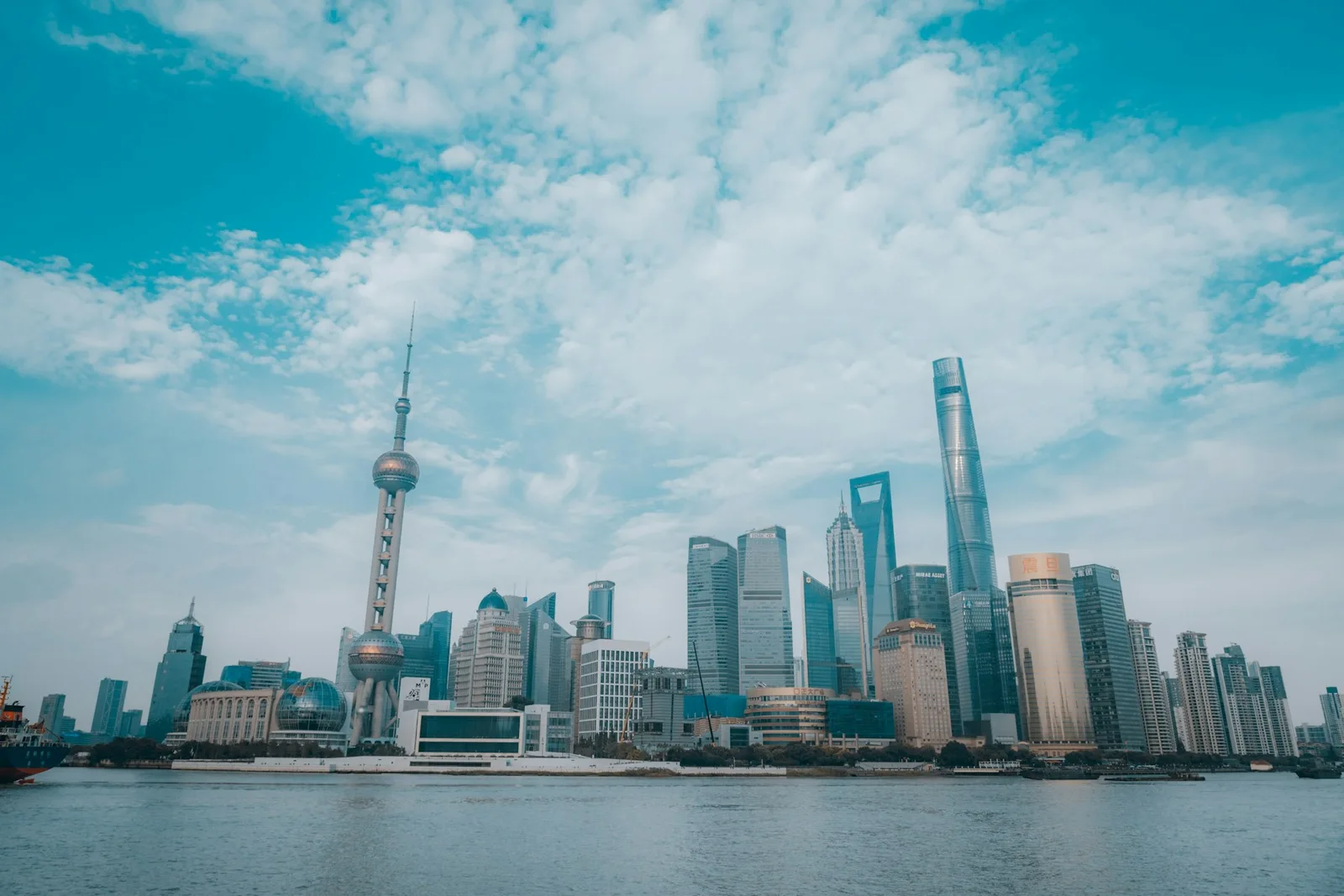
Shanghai is worth a stop if you want to understand China through a major living city: riverfront architecture, neighbourhood streets, museums, food and an easy onward rail connection. Plan three full sightseeing days for a first visit. Two give you a strong introduction; four let you explore at a gentler pace or leave the city for a day. Count an international arrival separately. Immigration, luggage, the journey to your hotel and fatigue can use up much of that day.
Is Shanghai worth a stop?
The Huangpu River gives this visit its shape. On the west bank, Puxi holds the Bund, People’s Square and the neighbourhood walks that make a city day feel varied. Across the river, Pudong offers the skyline you see from the Bund and another major museum. Start in Puxi, then give Pudong its own block of time instead of crossing back and forth for individual stops.
For a first arrival in China, Shanghai also works as a place to settle practical details before a longer trip: find a comfortable base, test your maps and payment methods, and learn how much walking suits you. The city’s official travel portal is a useful starting point for checking attractions and current notices.
How many full days do you need?
| Time available | Keep | Give up |
|---|---|---|
| Two full sightseeing days | One Puxi day and one Pudong plus neighbourhood day | A day trip and the ambition to see both Shanghai Museum sites |
| Three full sightseeing days | The two-day core plus an unhurried Xuhui/Jing’an day | Suzhou or Hangzhou unless one matters more to you than Shanghai itself |
| Four full sightseeing days | Three city days plus a flexible museum, family or day-trip day | Very little; still choose one main focus per day |
These are full days after arrival, not a claim that a late landing equals Day 1. If you have two nights and one complete day, use the first-day route below and keep the arrival evening simple.
A workable day-by-day route
Arrival day — settling in, not a full sightseeing day. Travel to your hotel, eat nearby and confirm tomorrow’s route. If you still have energy, take a short walk in your hotel’s district. Save the Bund for daylight or an evening when you can enjoy it without watching the clock. Use the first-day guide for your arrival checklist.
Full sightseeing Day 1 — central Puxi to the Bund. Begin around People’s Square. If you want a museum, choose the Shanghai Museum on People’s Square, No. 201 Ren Min Da Dao, Huangpu, then continue east toward the Bund. The museum’s own visitor page identifies this location; check its current exhibitions and admission arrangements before making it the day’s fixed point. Walk the Bund for the river view, then finish with dinner in central Puxi. This sequence keeps the first day on one side of the river.
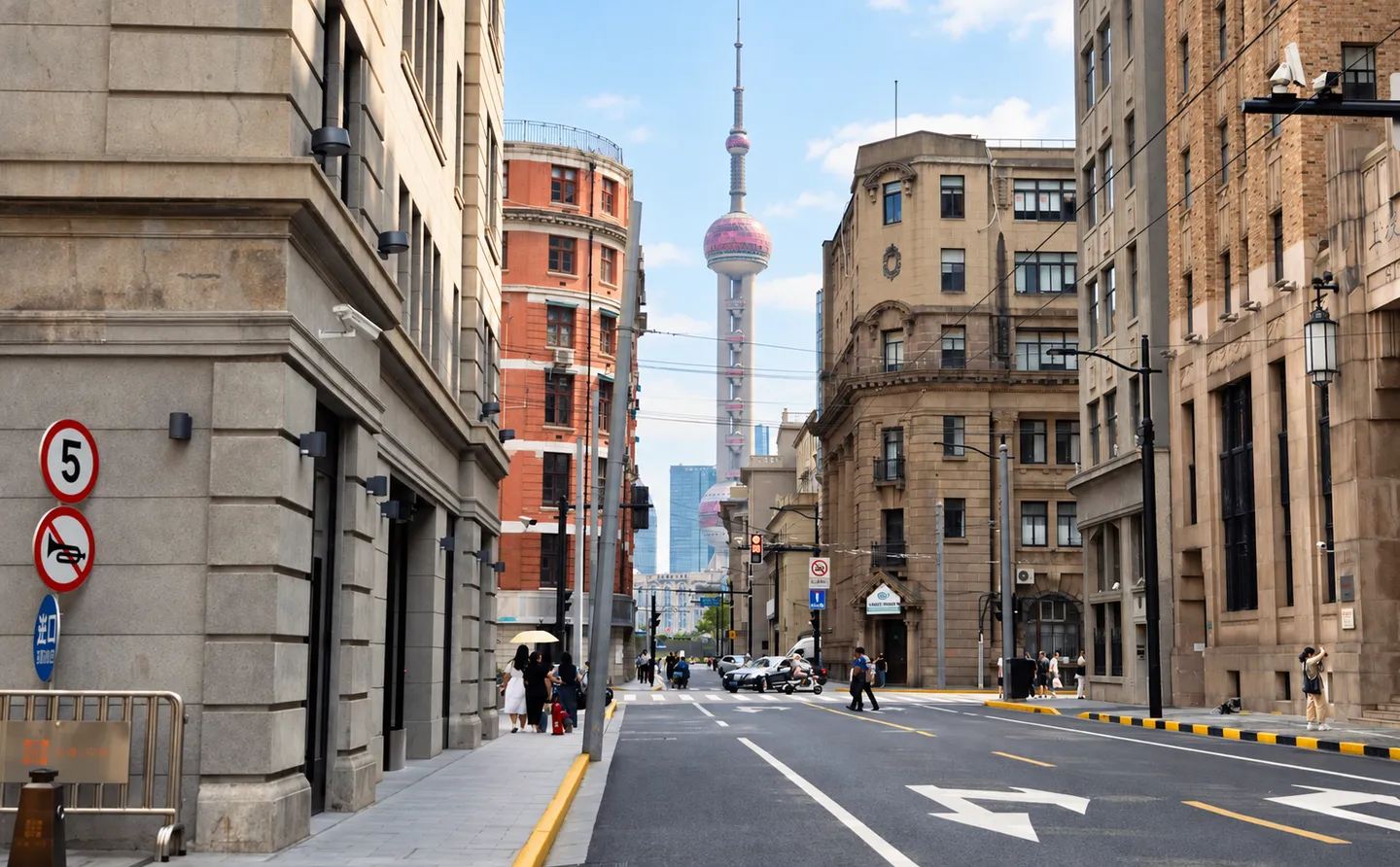
Full sightseeing Day 2 — Pudong, then a Puxi evening. Cross to Pudong and make the Shanghai Museum East, No. 1952 Century Avenue, your indoor anchor if Chinese art is a priority. It is a separate site from the People’s Square museum; the museum’s description of both locations helps you choose. Add a Pudong riverside or skyline stop, then return to Puxi for dinner. With only two days, spend the second half instead walking Xuhui or Jing’an if another museum feels like too much.
Full sightseeing Day 3 — neighbourhood Shanghai. Walk a manageable stretch of tree-lined Xuhui streets, stop for a meal, then spend the later part of the day in Jing’an or another Puxi area you want to revisit. Treat this as your breathing-space day: shops, cafés and ordinary streets are the point. If rain changes your plans, move a museum visit here and take the walk when conditions improve.
Full sightseeing Day 4 — choose one direction. Stay in Shanghai for a deeper museum visit, a slower family day and any stops you missed; or take one planned rail trip to Suzhou or Hangzhou. Do not try to combine both cities in one day. If you need to cut this itinerary, remove Day 4 first, then shorten Day 3. Keep the Puxi-to-Pudong sequence.
Where should you stay?
For a first independent visit, choose a hotel by the exact entrance and nearby metro station, not just a district name. Compare its route from your arrival point and its route to your departure station before paying.
| Base | Best fit | Trade-off |
|---|---|---|
| People’s Square | A practical central base for the Day 1 route and varied city connections | A large, busy area; check the hotel’s precise street location |
| Jing’an | Restaurants and a comfortable Puxi base for evenings | The Bund is an outing rather than a doorstep walk |
| Xuhui | A slower neighbourhood stay built around walks and meals | Allow more travel for Pudong and some major transport hubs |
| Bund area | Easy access to the riverfront, especially for a short stay | Confirm whether the room’s location and view justify its cost; “Bund” in a listing does not establish either |
Puxi is the simplest default for this route. A Pudong hotel can make sense for a specific appointment or preferred property, but map the repeated cross-river journeys first. See the China hotel guide for booking checks.
Shanghai airport to hotel: choose the route to your door
Start with the place printed on your arrival booking. Shanghai Pudong International Airport (PVG, 浦东国际机场), Shanghai Hongqiao International Airport (SHA, 虹桥国际机场), and Shanghai Hongqiao Railway Station (上海虹桥站) are three distinct destinations. At Hongqiao Airport, check whether your flight uses Terminal 1 or Terminal 2. At either airport, the right transfer depends on your hotel’s exact address, not just a central Shanghai neighborhood name.
Before departure, save your hotel’s Chinese name, full street address, phone number, and entrance pin for offline use. Check the hotel location against where to stay in Shanghai, then map the route from your actual terminal to the hotel door. Include every change of train and the final walk or vehicle ride. Maps in China can help you prepare that last stretch; keep the address available to show a driver or station staff if your phone connection fails.
Which airport transfer fits your trip?
| Choice | Consider it when | Check before committing |
|---|---|---|
| Metro | Your hotel is near a useful station and you can manage the changes and final walk. | The route from your terminal, the direction of travel, and the last onward service. |
| Maglev | You arrive at PVG and Longyang Road works as a transfer point for your destination. | The onward metro or road journey; Longyang Road is usually not your hotel door. |
| Airport Link | You need to travel between the Pudong airport area and Hongqiao Airport Terminal 2, or a stop on that line suits your full route. | The connection at each end and the service in your direction. It is not a direct express to most central hotels. |
| Taxi | Your group, luggage, hotel location, or arrival hour makes a door-to-door ride simpler. | The signed official taxi rank at your actual terminal, your hotel address, and how you will pay. |
PVG connects to Metro Line 2 and the maglev, which reaches Longyang Road for an onward transfer. SHA Terminal 1 connects to Metro Line 10; Terminal 2 connects to Lines 2 and 10. Follow signs at your terminal for the current official taxi rank. The city’s airport transport guide sets out those links. The city’s Airport Link guide identifies its Pudong Airport T1 & T2 and Hongqiao Airport Terminal 2 stations.
Compare the whole journey rather than the fastest train segment. A rail option can be convenient until it leaves you with a difficult interchange or a long walk after a flight. If you have heavy bags, a stroller, young children, or limited mobility, trace the route from platform through station exit to the hotel entrance. Ask the station or hotel whether the lifts you need are operating; if arranging a car, confirm that the boot fits your bags and request an appropriate child seat if needed. Choose a route you can comfortably finish.
Arriving late or making another connection
For an evening arrival, check first and last services for the direction and stations you need, including your final connection. Allow for immigration, baggage collection, and finding the platform before judging whether a train remains practical; the flight’s landing time is not the time you can board. If the rail route no longer works, use the signed official taxi rank or a hotel transfer you have confirmed. Consider a night bus only after checking that its route serves your destination and operates that night. Tell your hotel if late check-in is likely, and decline unsolicited rides in the arrivals hall.
Set up a payment fallback before travel without assuming any one card or app will work everywhere. Keep your hotel address accessible even if your phone battery or data runs out. The payment troubleshooting guide and first-day checklist cover useful preparations for the hours after landing.
If you are changing airports for another flight, treat Airport Link as one leg of a longer transfer. Check your airlines’ entry, baggage, check-in, and connection requirements, then allow time for each step at both airports. A published train ride describes time aboard the train, not the time needed to get from one flight to another.
For onward rail, read your ticket’s exact departure station before choosing an airport transfer. Shanghai Hongqiao Railway Station and Hongqiao Airport Terminal 2 are separate places: follow the signs for the station named on your ticket and allow time to reach the correct departure area and clear station checks. A ticket saying another Shanghai station needs a different route. Use the train ticket guide to plan booking and station arrival; China Railway’s official booking site is 12306.
How to fit food into the route
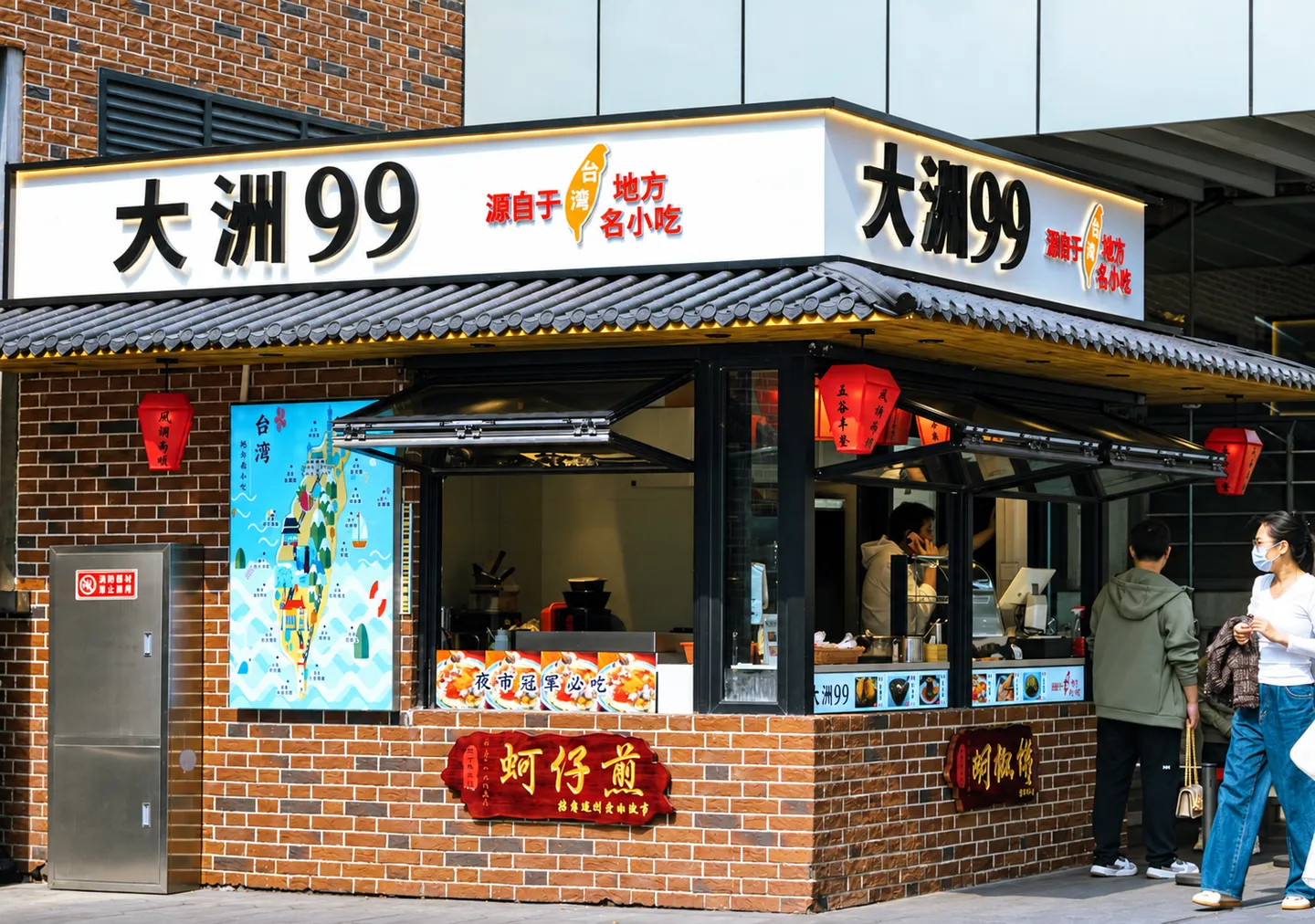
Let meals break up the walking rather than pull you across town. Eat near People’s Square or the Bund on Day 1, near your Pudong stop on Day 2, and wherever your Xuhui/Jing’an walk naturally ends on Day 3. Try a sit-down Shanghai-style meal alongside simpler snacks, and keep a translated address or map pin for any place you particularly want to find. Build your budget from hotel, intercity travel, local transport, admissions and meals; the trip-cost guide helps structure that decision without pretending one daily figure fits everyone.
Should you visit Suzhou or Hangzhou?
With two full days: no. With three: usually keep the day in Shanghai. With four: choose one if its particular appeal outweighs another city day. Choose Suzhou for a garden-focused visit or Hangzhou for a West Lake-focused day. These are preferences, not promises that either destination will be easy to cover comprehensively in one outing. Shanghai’s official regional guides discuss Jiangsu and Suzhou rail links and Zhejiang and Hangzhou rail links; choose actual trains by their station pairs and return options, not a generic city-to-city journey estimate. Leave room to reach the station and travel within the destination.
What to book first and what to change
Booking order: secure your arrival and onward travel dates; choose a hotel against those exact terminals or stations; reserve intercity trains when your plans and sales window permit; then check the museum or other timed venue you actually intend to enter. Verify venue notices close to the visit. Do not build the whole trip around an assumed admission rule: the two Shanghai Museum sites have separate visitor information at People’s Square and Museum East.
For rain or heat, shorten outdoor walks and use an indoor anchor. For limited stamina, keep one museum or neighbourhood per half-day and take a direct ride between areas. With children, replace a long museum session with a shorter visit and protect a meal and rest break. If a venue closes or a train plan falls through, keep the same district for a walk and food; move the flexible Day 3 or Day 4 activity into the open slot.
First-visit questions
Can I see Shanghai on a long airport layover? Only if your entry eligibility, transfer plan and time outside the airport allow it. Check those conditions for your own itinerary before treating a city visit as possible; a layover is not a full sightseeing day.
Which Shanghai Museum should I choose? Choose Museum East for a visit centred on its Chinese art collections. Choose the People’s Square site if its current programme interests you and you want it within the central Puxi day. Check the specific site’s current notices before going.
Should I sleep near PVG for an early departure? Compare the departure-day journey from your chosen city hotel with a nearby-airport stay. The right answer depends on your flight, luggage and tolerance for an early transfer; do not sacrifice several city evenings automatically.
What if I arrive exhausted or lose a planned morning? Make it a genuine arrival day. Start with Day 1 after a night’s sleep, and use the two-day version if necessary. Cut the optional outing before rushing both riverbanks.
Is Hongqiao airport the same as Hongqiao railway station? No. They belong to the wider Hongqiao transport area, but your ticket names a particular airport terminal or railway station. Check that exact destination and your transfer route.
Where to go next
If Shanghai begins a longer China journey, compare Beijing, Xi’an and the other destinations by what you want to see next, then fit the train or flight into a 5-day, 10-day or 14-day plan. Set the onward departure first; it determines how much of your final Shanghai day is truly free.
This is an editorial itinerary, not a timetable. Check official venue notices, your exact airport or station, and train availability before booking.